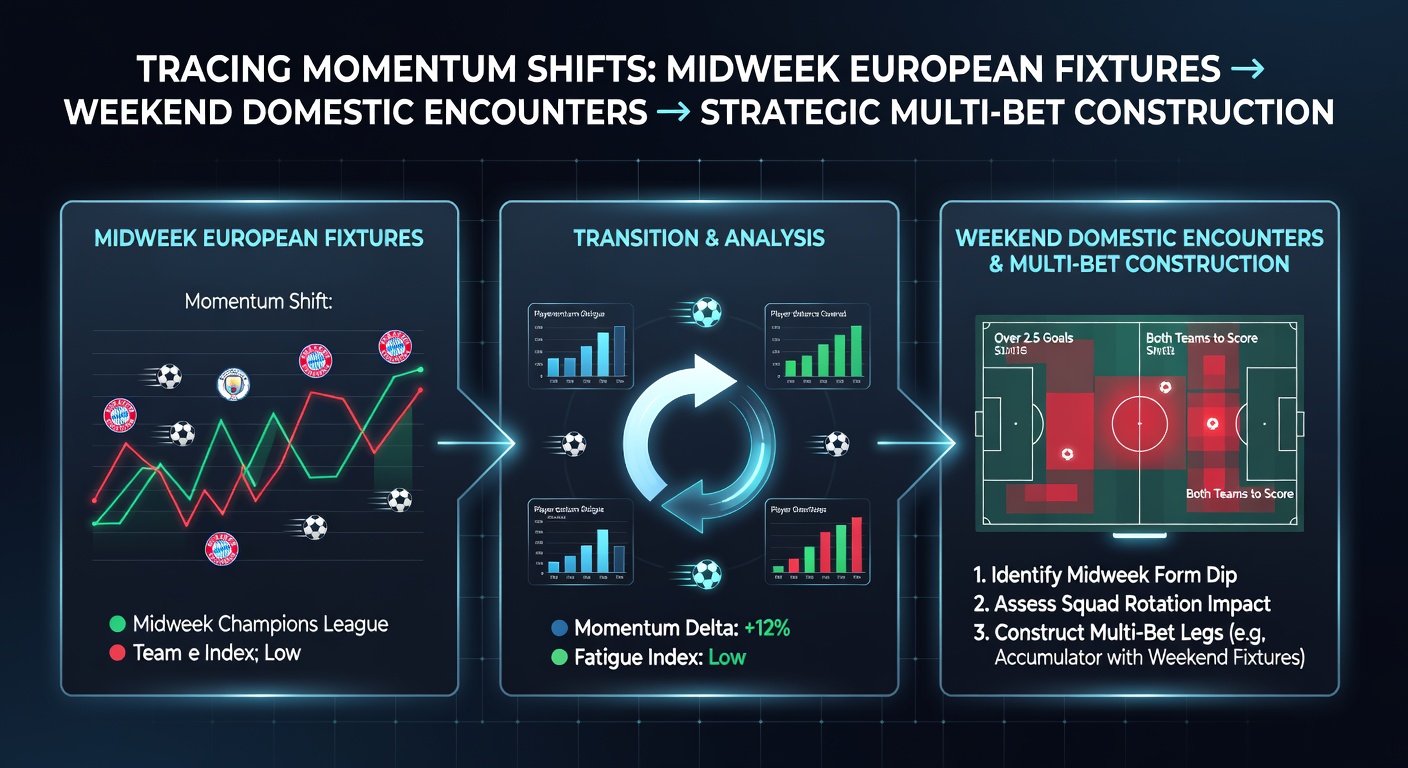
Tracing Momentum Shifts from Midweek European Fixtures into Weekend Domestic Encounters for Strategic Multi-Bet Construction
European midweek fixtures create measurable momentum patterns that carry into weekend domestic leagues, and analysts track these transitions through performance metrics across multiple competitions. Teams competing in UEFA Champions League or Europa League matches on Tuesdays and Wednesdays often face altered preparation cycles before Saturday or Sunday domestic encounters, which data from league tracking systems records in detail.
Fixture Congestion and Performance Metrics
Player workload spikes during midweek continental ties, with travel distances averaging over 1,200 kilometers for many clubs according to UEFA travel logs, and this leads to measurable drops in high-intensity running during the subsequent domestic fixture. Studies compiled by the European Club Association show that teams playing midweek European games record 8 to 12 percent fewer sprints in weekend matches compared to sides with full rest weeks. Those patterns emerge consistently across the English Premier League, Bundesliga, and Serie A seasons.
Coaches adjust lineups accordingly, rotating key midfielders and full-backs who logged the highest minutes in Europe, which creates opportunities for statistical models to forecast goal outputs and clean sheet probabilities. Data platforms that aggregate Opta and Wyscout figures highlight how these rotations correlate with specific outcomes in domestic play, particularly when a squad travels across time zones for a midweek away tie.
Data Patterns in Domestic Leagues
Weekend results following midweek European involvement reveal recurring trends that betting analysts incorporate into multi-bet structures. Home teams coming off European matches win at rates 4 to 7 percent below their season average in certain leagues, while visiting sides with similar schedules show elevated draw percentages. Researchers at the University of Loughborough documented these shifts over five seasons using match event data, noting stronger effects in leagues with tighter schedules.

Multi-bet constructors combine these domestic indicators with European recovery data to build accumulators. One approach links over-2.5 goals markets in domestic games where both sides played midweek, since defensive organization tends to loosen after continental exertions. Another targets under-2.5 goals when a rested home side faces a fatigued European participant, patterns that appear in aggregate statistics from major European leagues.
June 2026 Context and Pre-Season Carryover
In June 2026 the FIFA World Cup begins, creating an extended period of international fixtures that overlaps with club pre-season preparations for the 2026-27 domestic campaigns. National team call-ups during this window produce similar momentum disruptions, with players returning from long-haul travel and intense tournament schedules. Clubs then integrate these athletes into weekend domestic openers, and historical data from previous World Cup years shows elevated variance in early-season goal tallies.
Betting models adjust for these calendar quirks by weighting recovery time and training camp participation rates. Sources such as the Australian Sports Commission have published reports on athlete load management that parallel European observations, providing comparative benchmarks for how extended breaks and tournament involvement affect subsequent club performance.
Constructing Multi-Bets Around Momentum Indicators
Strategic accumulator construction relies on layering several indicators rather than isolated stats. Analysts cross-reference European match intensity ratings with domestic home advantage figures, then factor in weather and pitch conditions that compound fatigue effects. When multiple data points align, such as high European distance covered plus a short turnaround and adverse weather, the combined probability feeds into specific bet selections.
Examples include pairing a European participant with a low expected goals total in their domestic fixture against a rested opponent, or selecting both-teams-to-score outcomes when two sides return from attacking European ties. These combinations draw from league-wide datasets maintained by organizations including the German Football League, which publishes detailed post-match recovery metrics.
Conclusion
Momentum shifts traced from midweek European fixtures into weekend domestic encounters supply structured inputs for multi-bet construction when supported by aggregated performance data. Observers monitor travel loads, rotation patterns, and recovery timelines to identify recurring statistical edges across seasons. As the 2026 calendar introduces additional international demands, these analytical approaches continue to draw from established league records and independent research sources to maintain factual grounding in observed trends.