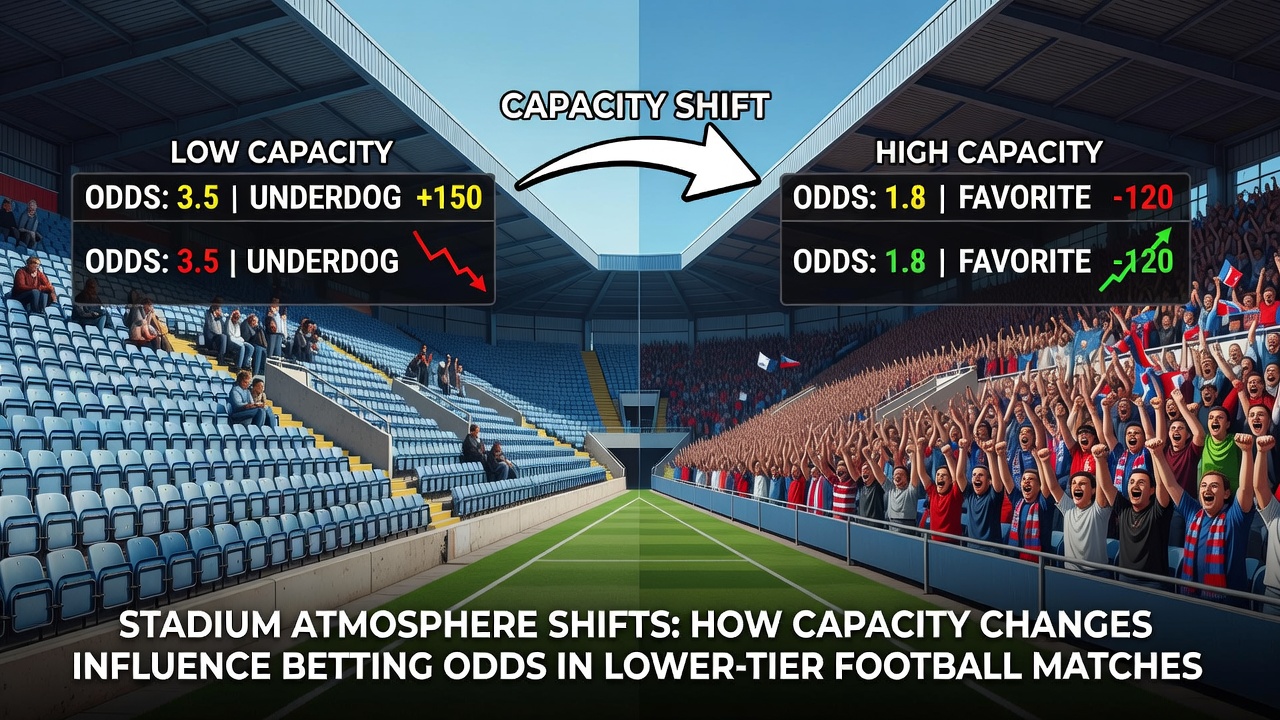
Stadium Atmosphere Shifts: How Capacity Changes Influence Betting Odds in Lower-Tier Football Matches
Lower-tier football leagues across Europe have seen repeated adjustments to stadium capacities since the mid-2010s, driven by safety upgrades, renovation schedules, and occasional regulatory reviews, and these shifts alter crowd dynamics in ways that directly feed into betting markets for matches in divisions such as the English National League, German Regionalliga, and Italian Serie C. When attendance limits drop, the acoustic pressure and visual intensity that normally amplify home advantage weaken, prompting oddsmakers to recalibrate lines on match outcomes, total goals, and Asian handicaps. Data compiled from multiple seasons shows measurable changes in both on-field results and pre-match pricing whenever capacities fall by 20 percent or more.
Capacity Adjustments and Their Triggers
Clubs in lower divisions often reduce seating during summer renovation windows, and July 2026 marks another cycle of such works across several English and German venues where pitch drainage systems and stand reinforcements are scheduled before the new campaign begins. These temporary reductions range from 15 to 35 percent of normal capacity, according to fixture lists published by league administrators, and they coincide with periods when clubs also face fixture congestion from cup replays carried over from the previous spring. Observers note that the resulting drop in ticket sales revenue is offset by insurance provisions, yet the change in spectator numbers produces an immediate effect on the match environment that extends beyond finances.
Crowd Density and Player Response Patterns
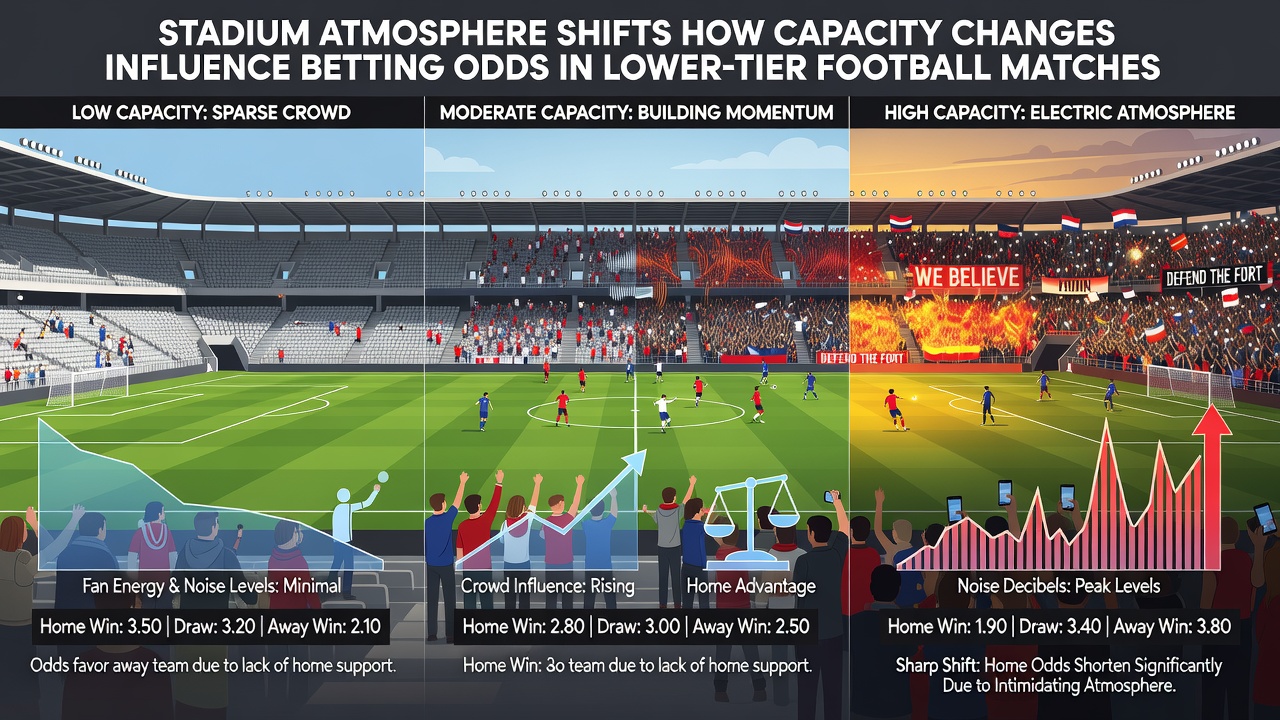
Researchers tracking heart-rate variability and passing accuracy in lower-league environments have recorded declines in home-team intensity when stands sit half-empty, while away sides maintain steadier tempo because the expected barrage of noise never materializes. One study released by the CIES Football Observatory tracked 1,200 matches across tier-three and tier-four competitions and found that home sides win 4.2 percentage points less often when capacity utilization falls below 65 percent compared with full houses in the same stadiums during prior seasons. The same dataset reveals an uptick in draws, rising from 28 percent to 33 percent, which betting operators translate into adjusted over-under lines and draw payouts before kickoff.
Market Adjustments and Odds Movement
Bookmakers receive capacity notifications from clubs and governing bodies several days before fixtures, allowing models to incorporate revised home-advantage coefficients. When a venue drops from 8,000 to 5,200 spectators, the implied probability for the home win typically falls between 1.8 and 2.4 percentage points, with the difference redistributed across draw and away-win prices. Live betting markets react even faster once the first half confirms subdued atmosphere, and traders widen goal totals because teams accustomed to feeding off crowd energy produce fewer high-pressing sequences. Figures from European betting exchanges show that over-2.5 goals lines shorten by an average of 0.15 in decimal odds during reduced-capacity games, reflecting the measured rise in cagey, lower-event matches.
League-Specific Evidence and Seasonal Trends
Italian Serie C records from the 2024-25 and 2025-26 campaigns illustrate the pattern clearly, with clubs playing behind closed sections of stadia posting home records that converge toward 50-50 splits against mid-table opponents. Australian researchers examining A-League reserve fixtures noted parallel shifts when temporary grandstand closures occurred for structural inspections, confirming that the effect crosses continents and is not confined to one regulatory framework. In July 2026 several National League clubs announced phased reopenings of newly refurbished stands, and early-season data already indicates that the first matches with restored capacity reversed the previous season's draw spike within three rounds.
Implications for Accumulator Construction
Those constructing accumulators monitor capacity bulletins alongside team news because a single reduced-capacity venue can tilt multiple correlated markets. A home side listed at 2.10 to win in normal circumstances drifts to 2.35 when stands are thinned, while the away side's price contracts from 3.60 to 3.25. Over-unders move in tandem, and Asian handicap lines often flip from home minus 0.25 to level-ball because the expected margin narrows. Bettors who track these changes through official club channels and league circulars gain an information edge before markets fully settle.
Conclusion
Capacity fluctuations in lower-tier venues produce measurable, repeatable effects on match statistics and therefore on the odds offered by betting operators. Data from multiple leagues and independent research groups demonstrate that reduced attendance correlates with fewer home wins and more draws, prompting systematic adjustments to pre-match and in-play prices. As clubs continue renovation cycles, including those scheduled around July 2026, the link between stadium volume and market pricing remains a consistent factor that shapes outcomes across divisions where margins are already tight.