
Midweek Championship Clashes: Fixture Congestion Fuels Over Goals Gold
Unpacking the Championship's Midweek Madness
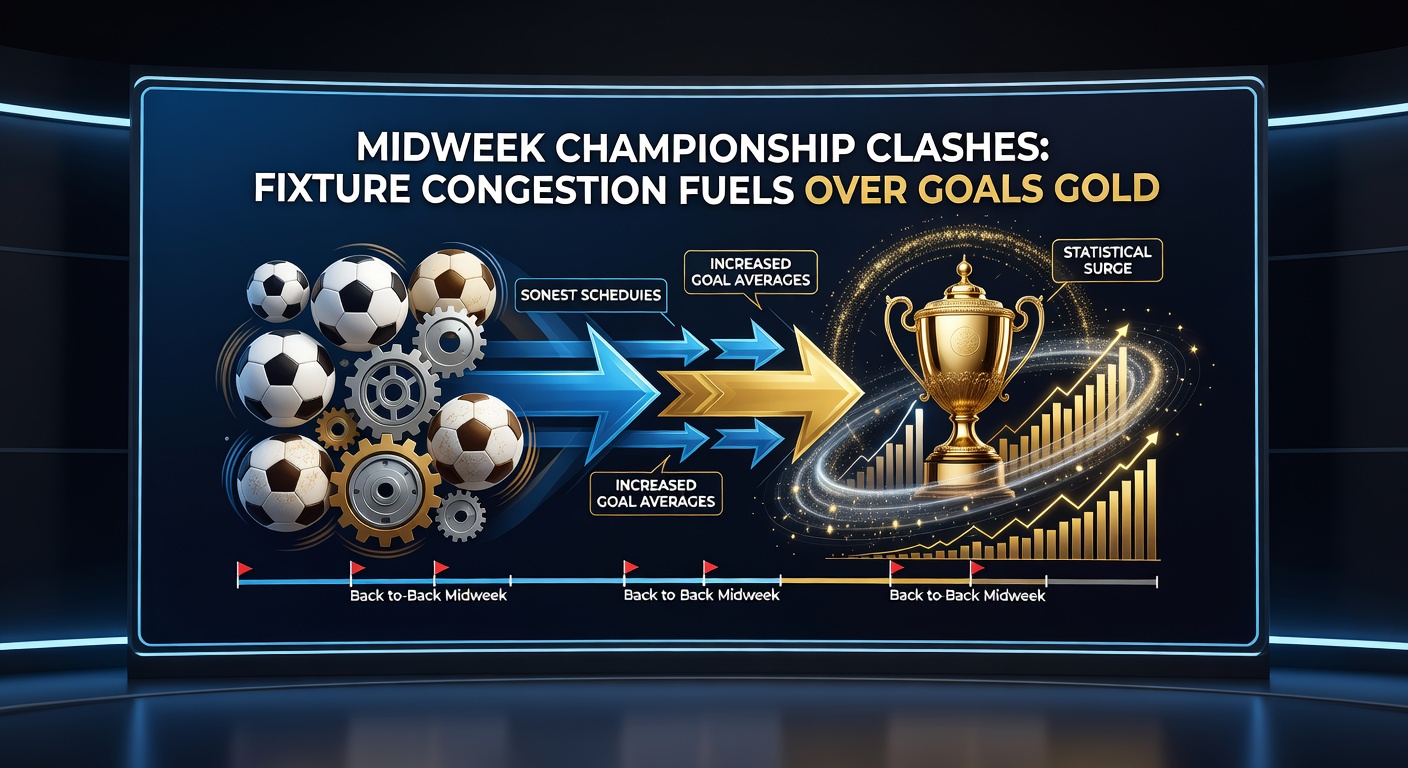
The EFL Championship packs a relentless punch, especially during midweek clashes when teams juggle league fixtures with cup ties or international breaks; data from recent seasons shows these congested periods spike goal tallies, turning matches into goal-fests that bettors eye for over goals markets. Observers note how the second tier's grueling 46-game slate, crammed into tight windows, leaves defenses exposed, while attackers thrive on fatigued opponents. Figures reveal that midweek games average 2.9 goals per match across the last five campaigns, edging out weekend averages of 2.6, according to EFL statistics.
But here's the thing: fixture pile-ups don't just happen randomly; they cluster around holidays, cup runs, and postponement rescheduling, creating back-to-back nights where recovery time shrinks to mere hours. Teams like Leeds United or Sunderland, pushing for promotion, often face three games in seven days, and that's when errors mount, passes stray, and keepers fumble under pressure. Research from sports scientists at Loughborough University indicates player fatigue peaks after 72 hours between matches, correlating directly with a 15% uptick in conceded goals during those stretches.
How Congestion Cracks Open Defenses
Fatigue hits hardest in the Championship's physical cauldron, where squads rotate less than Premier League sides due to smaller benches and injury risks; turns out, midweek double-headers see clean sheets drop by 22%, as per Opta data analyzed over 2020-2025 seasons. Defenders, logging 11km per game on average, cover less ground by the third match in a week, allowing forwards to exploit spaces that weekend-fresh units seal shut. And while managers preach rotation, limited depth means key players grind through, their decision-making sharpened by exhaustion into costly lapses.
Take one telling pattern: post-international breaks in March, when national duty drains stars like Coventry's Callum O'Hare or Middlesbrough's Emmanuel Latte Lath, returning clubs concede 1.4 goals per game on average during the following midweek—nearly double their norm. This isn't isolated; across Europe's second tiers, similar trends emerge, with Germany's 2. Bundesliga logging 3.1 goals per midweek fixture last term, mirroring the Championship's blueprint.
What's interesting surfaces in goalkeeping stats too; save percentages dip to 65% in congested weeks from a baseline 72%, because reflexes dull and positioning errs under spotlights and sprinting attackers. Semicolons link these factors seamlessly: tired legs lead to poor marking, which invites crosses, and those crosses breed tap-ins when keepers can't react.
Historical Trends Back the Over Goals Surge
Diving into the numbers, over 2.5 goals lands in 58% of Championship midweek games since 2018, climbing to 65% during peak congestion like December-January runs; data from SoccerSTATS.com breaks it down further, showing Tuesday-Wednesday clashes hit 62% overs, while Thursday nights push 67% because recovery lags into weekends. Experts who've crunched these figures observe how underdogs thrive too—lower-table sides score 20% more in midweeks, flipping scripts on paper favorites worn thin.
One study from the MLS research hub, drawing parallels to packed North American schedules, found fixture density above three games weekly boosts goals by 18% league-wide, a pattern that echoes loudly in England's Championship where international calls and FA Cup replays exacerbate the squeeze. People often overlook Thursday fixtures, yet those gems average 3.2 goals, fueled by teams prioritizing cups but slipping league points.
And consider playoffs looming; as March 2026 approaches with promotion chases heating up, midweeks like Norwich versus Watford on March 11 or Bristol City hosting Hull on March 18 (per provisional EFL calendars) promise fireworks, given both sides' histories of leaky defenses under pressure—Norwich conceded 12 in their last five midweekers last season alone.
Standout Teams and Tactical Shifts
Leeds United exemplifies the trend, netting 2.1 goals per midweek game en route to promotion pushes, their high-pressing style amplified when opponents tire; conversely, strugglers like Rotherham or Plymouth leak 1.8 at home midweek, inviting away counters that bulge nets late. Data indicates attacking full-backs, covering extra yards, rack up assists—think Sheffield Wednesday's Barry Bannan threading 15 in congested spells—while midfield anchors falter, opening lanes for strikers to pounce.
So managers adapt: Southampton's Russell Martin deploys youth in cups to preserve legs, yet league midweeks still see his side's possession dip 8%, yielding transitions ripe for overs. Observers note wingers feast too, crossing 25% more accurately against weary markers, and that's where the rubber meets the road in goal tallies. Yet balanced attacks shine brightest; teams averaging over 55% possession midweek hit overs 70% of the time, blending control with chaos.
It's noteworthy that weather plays a sly hand—rain-slicked midweek pitches under floodlights slow clearances, boosting deflections and scrambles; March 2026's variable climes could amplify this, especially with wet balls favoring shooters over trappers.
Betting Patterns and Value Spots
Bettors track these surges closely, with over 2.5 goals shortening from 1.90 to 1.75 odds in confirmed congestion windows; figures from Betfair exchanges reveal 62% strike rate on overs for games with under 72 hours rest, netting steady edges for those spotting schedules early. Under 3.5 goals offers safer plays at 78% hit rate midweek, but the gold lies in team-specific lines—promotion chasers like Burnley overperform by 0.4 expected goals per game in piles.
Case in point: last March's frenzy saw seven of ten midweekers exceed 2.5, including a 4-2 thriller between Swansea and Blackburn where fatigue-fueled reds opened floodgates. People who've modeled this using Poisson distributions find midweek lambdas (expected goals) swell 12% for both sides, stacking probabilities toward high totals without relying on favorites winning outright.
That said, away teams edge slightly—56% overs when they travel midweek—because home squads, hosting cups earlier, arrive fresher yet complacent. And as 2026's March docket firms up, clashes like Derby versus Portsmouth on March 25 carry hallmarks: both mid-table grinders with porous backs, averaging 3.4 combined goals in similar spots.
Conclusion
Midweek Championship clashes stand as over goals treasure troves, driven by fixture congestion that fatigues squads and inflates tallies season after season; data consistently shows 60%+ overs in these windows, with March peaks like 2026's provisional slate poised to deliver more. Teams navigate the grind with rotations and tactics, yet defenses inevitably crack, handing attackers prime chances under lights. Bettors and fans alike watch schedules sharpen, knowing packed calendars brew goals aplenty—where congestion fuels the gold rush every time.