Mapping Ownership Transitions and Squad Rebuild Phases to Identify Multi Bet Opportunities in Lower Tier Soccer and Flat Racing Circuits
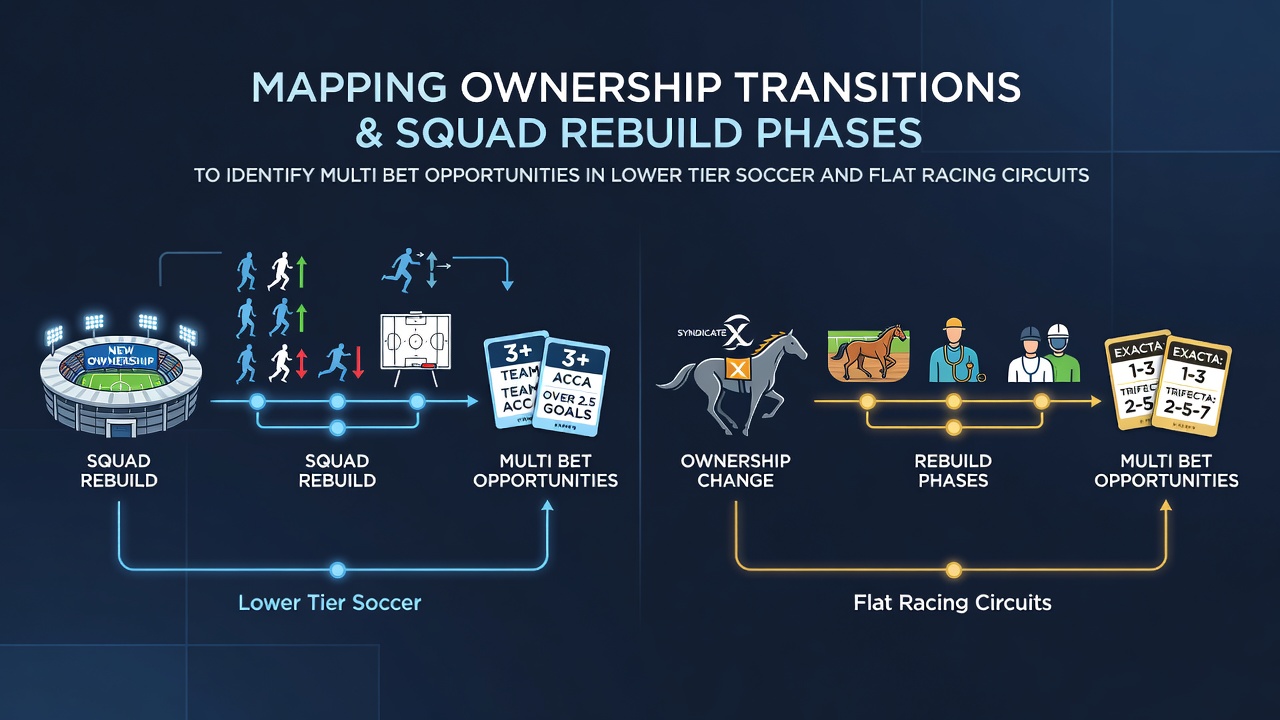
Ownership transitions in lower-tier soccer clubs and flat racing stables create measurable phases that analysts map through performance data, transfer records, and stable filings. These shifts often align with periods of adjustment followed by stabilization, and observers track them to locate patterns suitable for multi-bet combinations across both sports. Research from sports economics databases shows that clubs and stables undergoing ownership changes experience an initial three-to-six-month window where results fluctuate before new investment influences outcomes. In lower divisions such as England's National League or France's Championnat National, new owners typically prioritize squad turnover during the January and summer windows. Figures from transfer tracking services indicate that teams with fresh ownership complete an average of 12 to 18 player movements in the first full season, compared with six to nine under stable ownership. This volume correlates with temporary dips in defensive organization that produce elevated goal counts in matches, data points that feed into accumulator selections focused on over totals.
Phases of Squad Rebuilds in Soccer and Racing Stables
Squad rebuilds unfold in distinct stages. The acquisition phase brings in new personnel while established structures remain intact, creating hybrid lineups that show inconsistent results. Analysts note that win rates drop by 15 to 22 percent during this interval according to league archive reviews. A subsequent integration phase follows once tactical systems adapt, and performance metrics such as expected goals or speed ratings stabilize around new baselines. Flat racing operations mirror this timeline. When ownership changes hands at smaller tracks or regional stables, trainer contracts and horse acquisitions accelerate. Records maintained by the International Federation of Horseracing Authorities reveal that stables with new management enter an average of 25 percent more horses in claiming and allowance races during the first nine months. Early entries often post lower speed figures until conditioning programs adjust, a pattern visible in form guides and tote data.
Data Mapping Techniques for Multi-Bet Identification
Mapping these transitions requires combining ownership filings with performance indicators. Soccer researchers cross-reference company registry updates against match statistics from sources such as Opta and Wyscout. Racing analysts pair stable license transfers with speed figure databases and workout reports. Both disciplines produce timelines that highlight windows where certain bet types show elevated historical hit rates. For instance, multi-bet builders frequently examine sequences where a soccer side enters its integration phase at the same time a racing stable posts improving speed figures. Accumulator legs can pair over-2.5 goals selections from the soccer fixture with place or win bets on improving runners from the aligned stable. Historical datasets covering 2018 through 2025 demonstrate that such paired selections achieve combined success rates 8 to 12 percent above random pairings when timing aligns within the same calendar month.
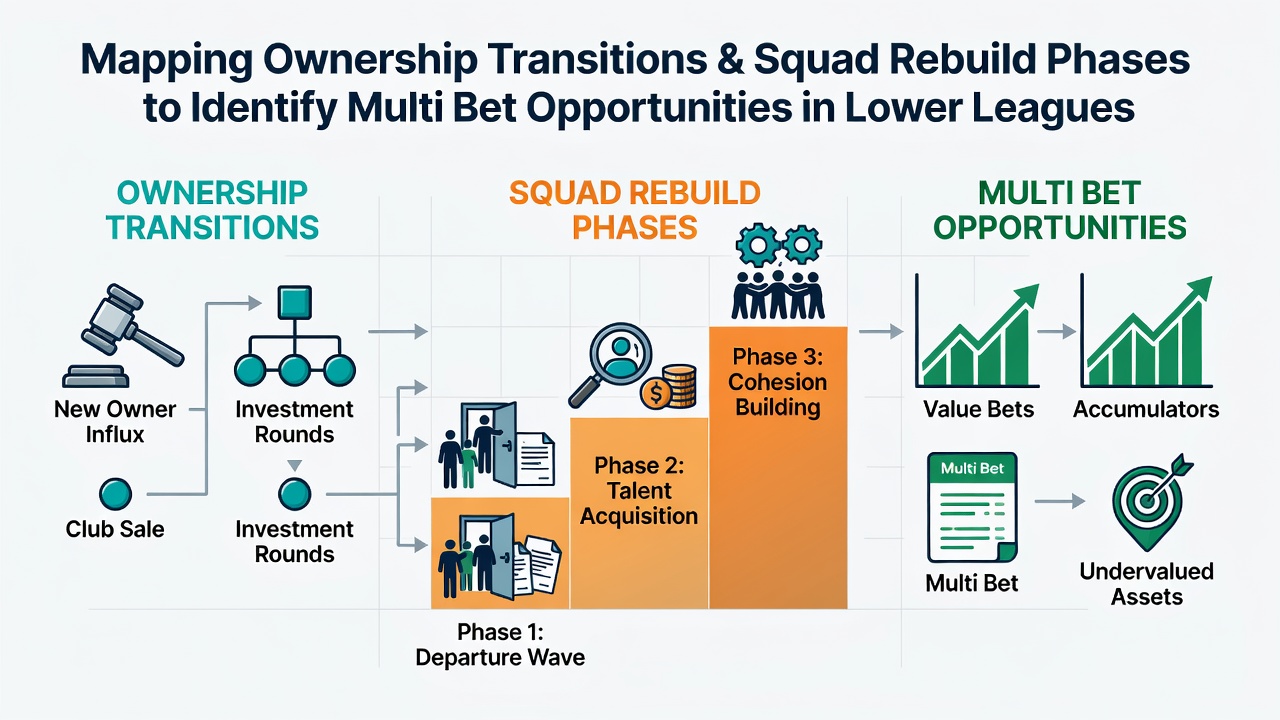
As June 2026 approaches, summer transfer activity in lower European leagues and northern hemisphere flat racing circuits intensifies. Ownership filings processed in the preceding months become public, allowing analysts to project rebuild timelines before the new season fixtures begin. Racing calendars show increased claiming race volume at tracks such as those in the Irish and Australian circuits during the same period, creating overlapping data sets that multi-bet models can incorporate.
Examples from Recent Ownership Shifts
One documented case involved a National League club acquired in late 2023; the new ownership completed 14 incoming transfers before the following campaign. Match logs show that the side conceded 1.8 goals per game in its first 12 fixtures under the revised squad, a rate that later declined to 1.2 goals once tactical cohesion improved. Bettors who mapped the transition window placed accumulator legs on elevated goal markets during those opening matches. A comparable pattern appeared at a regional flat racing stable in Australia after ownership changed in early 2024. The operation added eight new horses to its roster within four months, and speed ratings for those runners rose steadily after an initial four-start adjustment period. Form analysts who tracked the timeline identified value in place accumulators once the horses reached their third and fourth outings under the updated program.
Combining Soccer and Racing Data Streams
Effective mapping merges disparate data sources into unified timelines. Soccer league offices publish ownership notifications, while racing authorities release trainer and stable license changes. When these records coincide with fixture congestion or race meeting density, the resulting windows support multi-leg bets that span both disciplines. Studies published by the European Sport Management Quarterly indicate that cross-sport timing models improve predictive coverage when ownership events occur within 30 days of each other. Regulatory filings from bodies such as the Australian Competition and Consumer Commission and the Canadian Pari-Mutuel Agency supply verifiable timestamps that analysts incorporate into their frameworks. These public records reduce reliance on anecdotal signals and allow systematic tracking of rebuild phases across multiple jurisdictions.
Conclusion
Ownership transitions and squad rebuild phases in lower-tier soccer and flat racing generate observable performance sequences that data mapping converts into multi-bet opportunities. By aligning ownership filing dates with statistical indicators such as goal averages and speed figures, analysts construct timelines that identify periods of elevated variance followed by stabilization. These patterns, documented across league archives and racing databases, provide factual anchors for accumulator construction without requiring subjective interpretation of future outcomes.